
Wallpaper vs Paint: How to Decide
Choosing between wallpaper vs paint usually comes down to how a material actually behaves in a room over time. That dividing line often separates a standard finish from a truly spectacular space.
Our professional wallpaper installation team serves clients across Toronto and the GTA.
Specialized wallcoverings offer unique benefits, and paint provides undeniable flexibility. Many clients ask us: is wallpaper better than paint?
Let’s look at the hard data and explore exactly how this comparison breaks down.
The Five Dimensions That Matter
Lifespan
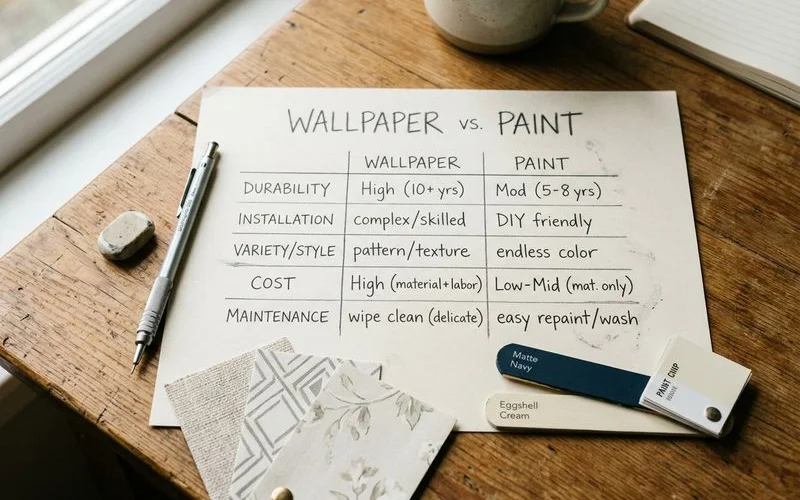
Quality interior paint typically requires a refresh every five to seven years. Premium wallpaper often lasts 10 to 15 years before showing any signs of wear.
High-end paint formulas like Sherwin-Williams Emerald can push a painted wall’s lifespan to 10 or 12 years. True luxury wallcoverings frequently exceed 15 years in low-traffic spaces like formal dining rooms.
We see these natural fibre papers outlast multiple paint cycles. A well-executed installation protects your investment against peeling and bubbling.
Here is what you can expect from different wall finishes based on 2026 industry data:
- Standard interior paint: 5 to 7 years before noticeable scuffing or chipping.
- Premium washable paint: 10 to 12 years with proper care and maintenance.
- Standard vinyl wallpaper: 10 to 15 years in dry, temperature-controlled conditions.
- Luxury grasscloth: 15+ years in low-traffic areas like primary bedrooms.
Cost-per-Year Math
The wallpaper vs paint cost debate shifts dramatically when you calculate expenses over a decade. Two professional repaints usually exceed the price of a single luxury wallpaper installation.
Current 2026 market rates in Toronto show average painting costs run between $1.50 and $4.00 per square foot for labour and materials. Professional wallpaper hangers generally charge $3 to $7 per square foot for installation labour.
We encourage clients to review our Wallpaper Installation Cost in Ontario guide for exact tier breakdowns. A premium job might hit $2,500 total for a standard room, but avoiding a $900 repaint every five years balances the ledger quickly.
| Material Choice | Initial Cost (Labour + Materials) | Repaints Required (15 Yrs) | Total 15-Year Estimated Cost |
|---|---|---|---|
| Premium Paint | $850 | 2 | $2,550 |
| Luxury Wallpaper | $2,500 | 0 | $2,500 |
Design Flexibility
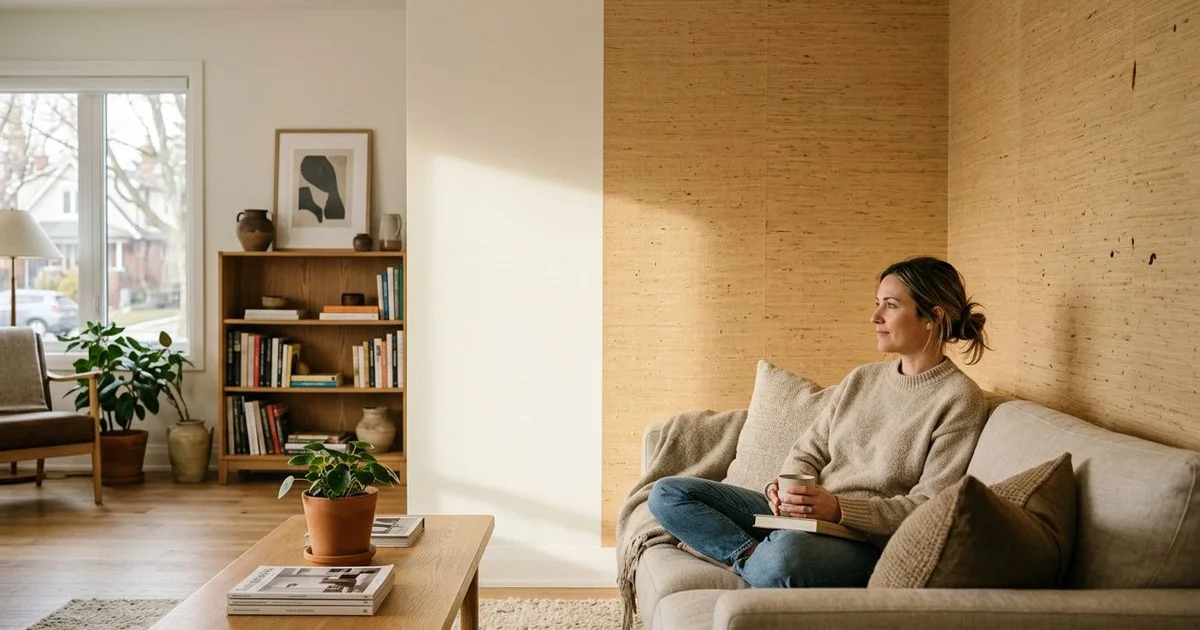
Wallpaper delivers texture, depth, and material character that flat paint simply cannot replicate. Paint offers endless colour matching, but it completely lacks physical dimension.
Top-tier options like Phillip Jeffries grasscloth feature natural fibres laminated in Japan to create rich, textured walls. Companies such as De Gournay offer hand-painted custom scenes that cost between $250 and $1,200 per roll to transform a blank room into an art piece.
Our team frequently installs Type II performance vinyl for clients wanting the look of natural fibres with extreme durability. This synthetic material cleans easily and resists high-traffic scuffing perfectly.
Here are popular high-end materials that paint cannot duplicate:
- Dimensional Grasscloth: Natural arrowroot or hemp fibres that cast subtle shadows.
- Performance Vinyl: Commercial-grade durability that mimics delicate silk or linen.
- Artisan Murals: Sweeping, continuous landscape scenes scaled exactly to your wall dimensions.
- Metallic Foils: Reflective surfaces that bounce light and brighten dark interior spaces.
Removal and Repair
Professionally installed wallpaper strips away cleanly, while painted walls require sanding and patching to fix chips. Removing old paper yourself is risky and frequently damages the underlying drywall.
Amateur removal attempts often gouge the wall surface and leave stubborn adhesive behind. Purchasing the necessary tools like specialty smoothers, seam rollers, and chemical activators easily costs over $200.
Our crew handles these exact prep jobs weekly because DIY removal goes wrong so often. Hiring a professional installer saves you from buying expensive single-use tools.
Proper techniques ensure your walls remain pristine for the next application. You save money and avoid a massive cleanup headache.
Here are the most common DIY removal mistakes to avoid:
- Dry scraping: Tearing off paper without proper chemical activators damages the drywall face.
- Over-soaking: Flooding the wall with water can warp the drywall board itself.
- Ignoring residual glue: Painting over old wallpaper paste creates a bubbling, uneven texture.
Room-by-Room Suitability
Moisture levels and daily foot traffic dictate whether wallpaper or paint belongs in a specific room. High-humidity spaces demand paint or specialised vinyl, while dry rooms welcome delicate materials.
We always evaluate the environmental stress of a room before recommending a finish. This straightforward assessment prevents costly damage to high-end paper.
| Room | Wallpaper Verdict | Why |
|---|---|---|
| Powder room | Strong | High visual impact, low humidity, small square footage |
| Accent wall (any room) | Strong | Pattern + texture creates a focal point paint cannot match |
| Bedroom | Strong | Low traffic, long lifespan, mood-setting pattern works |
| Dining room | Strong | Pattern depth, atmosphere, wallpaper carries the room |
| Hallway/staircase | Mixed | Durability matters; vinyl wallcoverings work, paint may be lower-maintenance |
| Kitchen | Mixed | Choose vinyl/Type II only; greasy walls degrade non-vinyl papers |
| Full bathroom | Mixed | Vinyl works; non-vinyl paper struggles with sustained humidity |
Verdict: Both, Used Right
For most Toronto homes, the correct answer to the wallpaper vs paint debate is a strategic mix of both materials. Paint handles the heavy wear in mudrooms, while wallpaper anchors the design in your primary living spaces.
We find that Powder rooms are the most popular starting point because they offer high visual impact without the sustained humidity of a full shower. This small footprint lets you invest in premium luxury rolls without blowing your renovation budget.
Our installers are happy to walk through your specific space and provide a free quote within 24 hours. Booking a fast consultation is the easiest way to clarify your design plan.